Session 3: Clock(s)
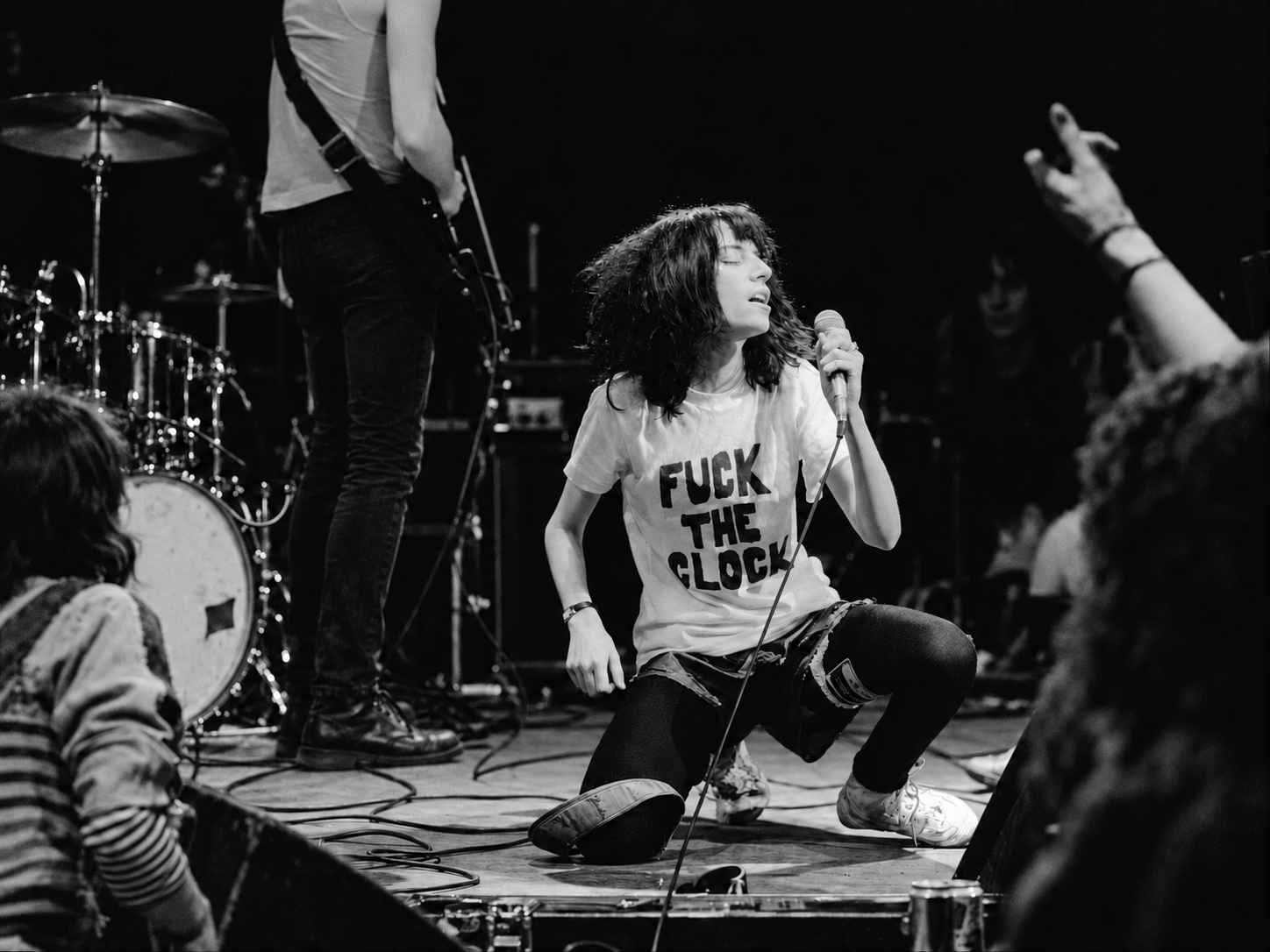
Allan Tannenbaum, Patti Smith (Fuck the Clock), 1978 x AI
Singer-songwriter Patti Smith wore her declarative T-shirt during a New Year’s Eve performance at CBGB in New York City in 1978. The phrase can be read as a rejection of modern life organised around schedules, deadlines and measured time.
A clock is never only a device for displaying hours and minutes. It also reflects how we choose to divide, represent and experience time.
Focus
Represent time, duration, cycles and change visually and conceptually through a generative system.
Idea
A device or system that visualises the passing of time.
It changes throughout the day and incorporate some form of cycle, rhythm, repetition or accumulation.
Consider different ways of understanding time:
- biological time and chronobiology
- ultradian, circadian and infradian rhythms
- solar and lunar cycles
- celestial time
- geological time
- historical time
- decimal time
- psychological time
- subjective time
- duration
- repetition
- anticipation
- memory
Ask:
- What aspect of time does the system represent?
- What changes continuously?
- What happens periodically?
- What accumulates?
- What resets?
- Does the system show exact time or an experience of time?
- What would the system look like at another moment of the day?
The concept of time
Time and movement in art are closely connected, but they are not the same thing.
Movement can be directly observed. Time is more abstract. It can be measured through changes, cycles, events, memories and relationships.
A time-based work may therefore make time visible indirectly:
change → duration → repetition → accumulation → memory
Linear and cyclical time
Linear time
In a linear model, time moves from a past toward a future.
past → present → future
The present continually moves forward.
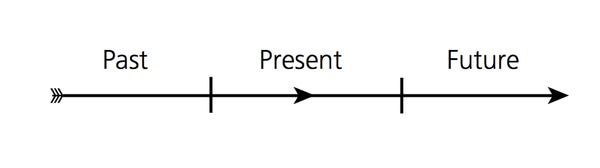
American flow of time, Richard Lewis
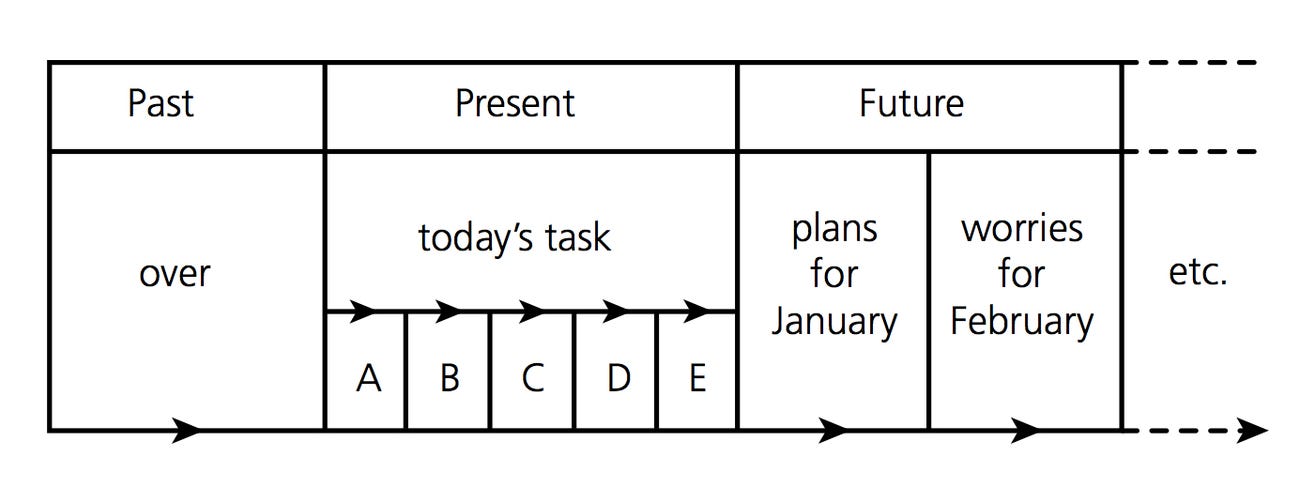
Carving up American time, Richard Lewis
Digital clocks, calendars, schedules and timelines are strongly associated with this model because they divide time into measurable units.

Timeline of art in the ancient world, Parthenon Graphics

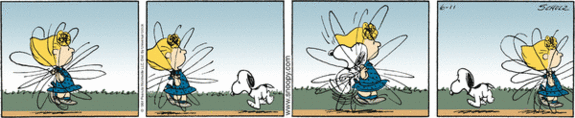
Charles M. Schulz, Peanuts.
Cyclical time
In contrast, cyclical time describes repeating processes.
cycle → return → cycle → return → ...
Examples include:
- day and night
- seasons
- lunar phases
- biological rhythms
- breathing
- rotation
- mechanical clocks
Analog clocks are themselves visualisations of cyclical time.
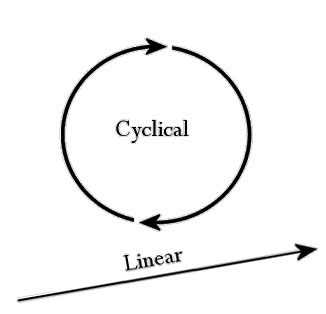
Cycles can also exist inside other cycles.
- A second belongs to a minute.
- A minute belongs to an hour.
- An hour belongs to a day.
- Days belong to larger biological, social and astronomical cycles.
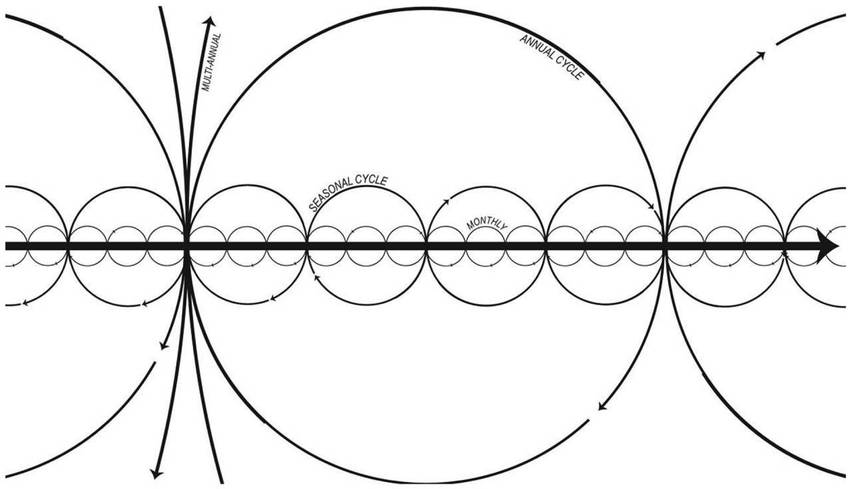
Portrayal of historical experience combining linear and cyclical modes
The distinction between linear and cyclical time is useful, but most real systems contain elements of both.
References
Humans since 1982: ClockClock
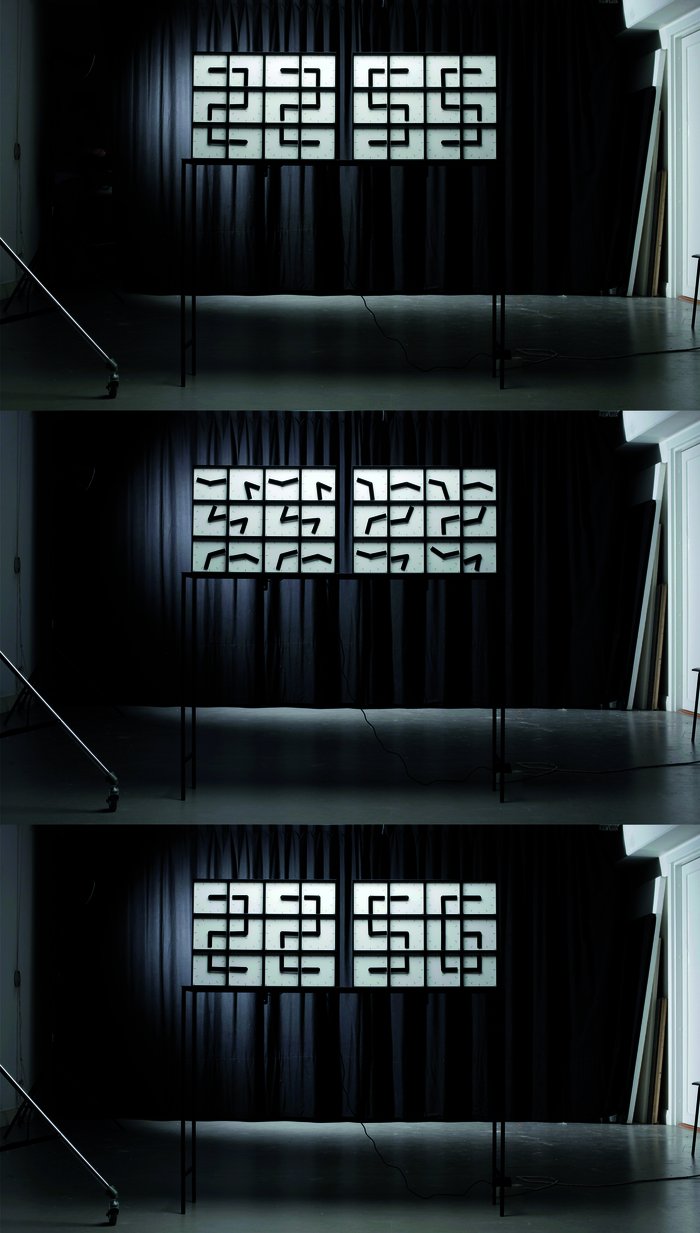
ClockClock, Humans since 1982.
ClockClock uses many analogue clock faces as individual visual units. Their hands rotate independently and periodically align to create larger figures.
The work turns a familiar timekeeping mechanism into a generative display.
It is useful to think about:
- one unit versus the larger composition
- synchronisation
- independent cycles
- phase
- temporary alignment
- readability emerging from motion
See also A Million Times.
Watch ClockClock White by Humans since 1982 on Vimeo
Christiaan Postma: Clock
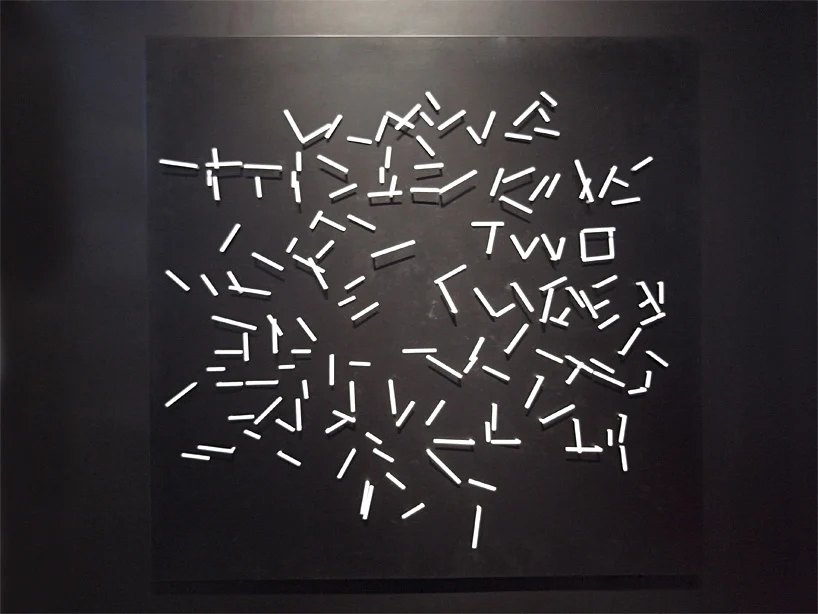
Clock by Christiaan Postma, image via Designboom
Christiaan Postma’s Clock uses more than 150 individual clock mechanisms arranged to function together as one larger clock.
The hands gradually form written hour names. The current hour becomes readable as its word becomes complete while the surrounding words dissolve.
The work uses the clock mechanism itself as both data source and drawing instrument.
Albin Karlsson: 0.5g min
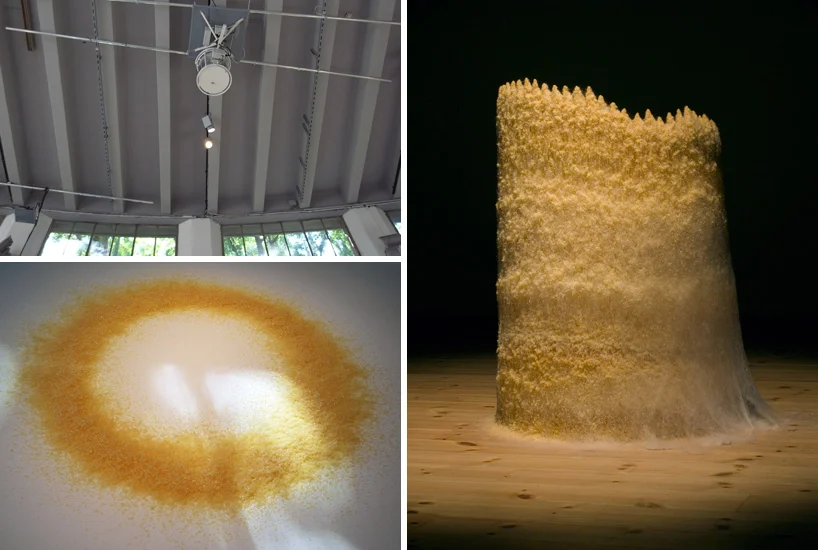
0.5g min, Albin Karlsson, 2007. Image via Designboom
In 0.5g min, a machine releases approximately 0.5 grams of hot glue every minute while rotating like the hand of an analogue clock.
Rather than displaying time symbolically, the machine converts duration into physical material.
A form gradually grows on the floor.
Time becomes accumulation.
Watch the video by Albin Karlsson on Vimeo
See also: Countdown
Exquisite Clock
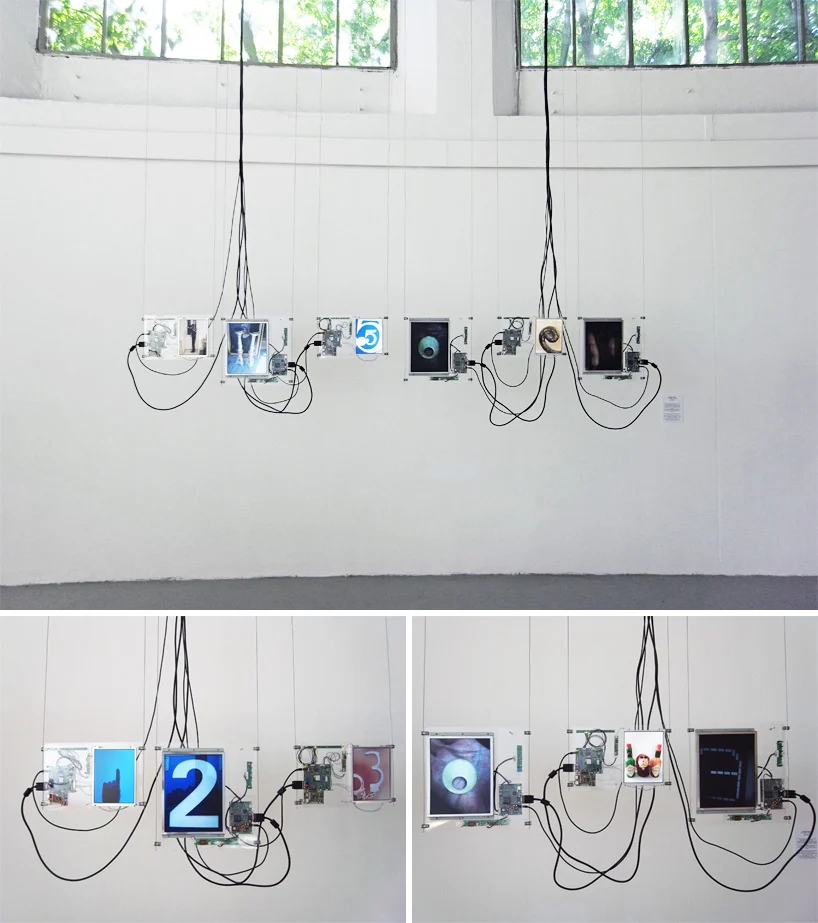
Exquisite Clock builds a digital clock from photographs contributed by different people.
Each digit is replaced by an image containing that number in the physical world.
The clock therefore combines exact digital time with a continuously changing collective image archive.
Olafur Eliasson: Beyond Human Time
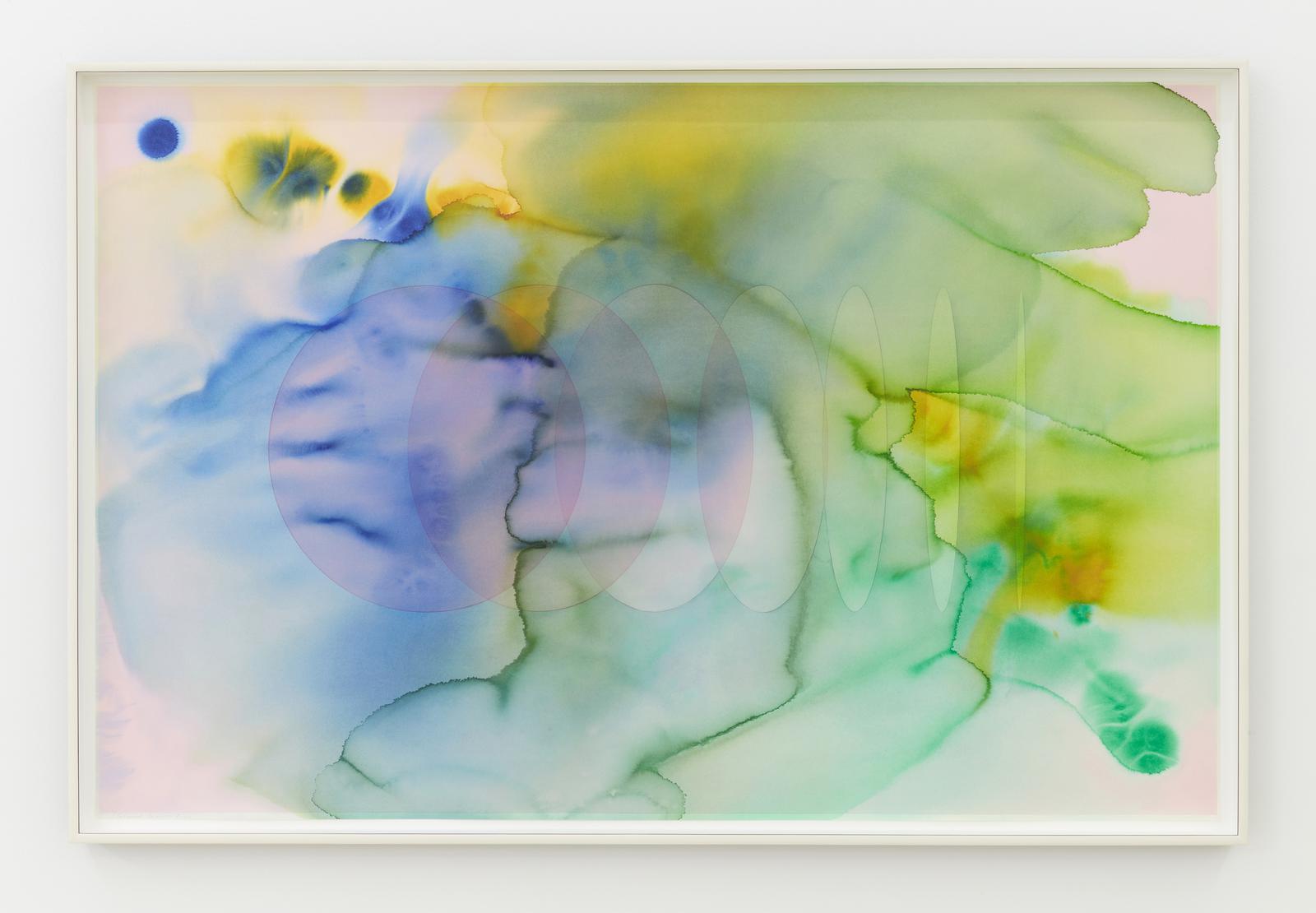
Olafur Eliasson, Beyond Human Time, 2020
Beyond Human Time was produced using pieces of ancient glacial ice collected during the production of Ice Watch.
The work connects human perception of time with geological and environmental timescales.
Rather than measuring seconds or hours, it asks us to think about forms of duration far beyond everyday human experience.
Olafur Eliasson: Solar Noon
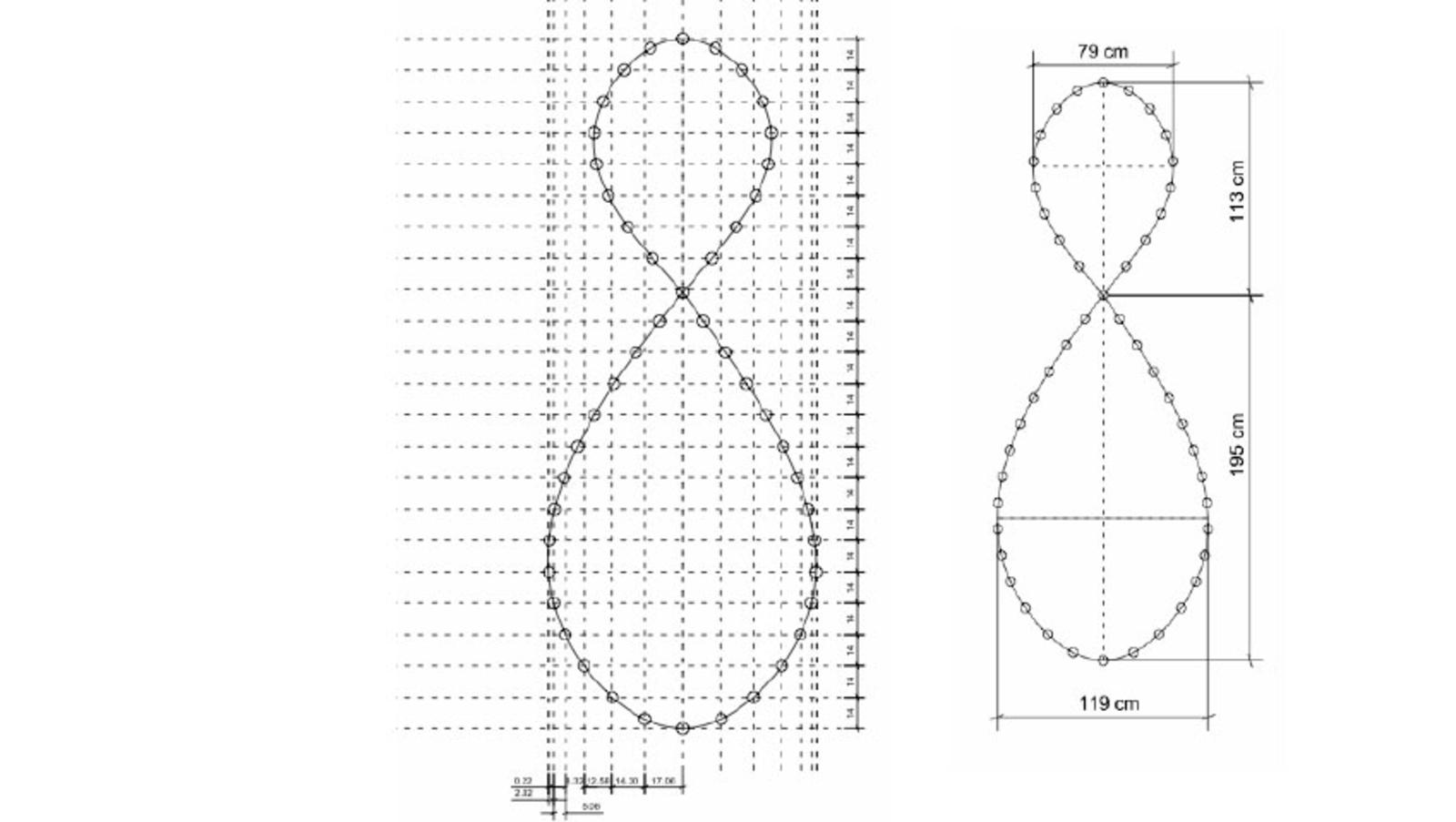
Here time is connected to the movement of the sun rather than to an arbitrary digital counter.
This is a useful reminder that clocks are abstractions built on top of larger physical and astronomical cycles.
Susanna Hertrich: Chrono-Shredder
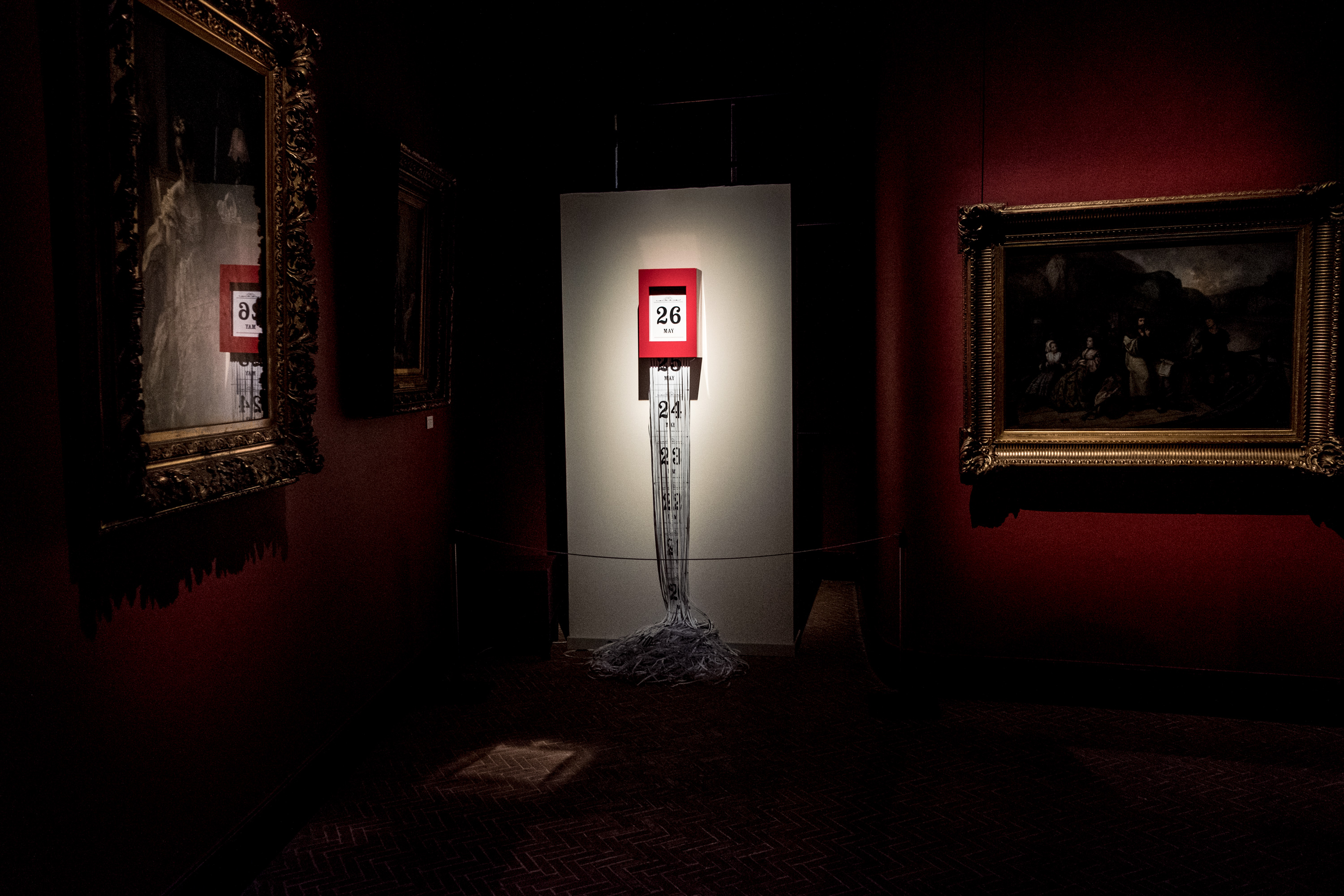
Chrono-Shredder, Susanna Hertrich
Chrono-Shredder prints the current date on a continuous roll of paper.
As time passes, the printed dates slowly move toward a shredder and are destroyed.
The work connects measurement, anticipation and irreversible time.
It does not only display time.
It physically removes the past.
Martí Guixé: Time to Eat
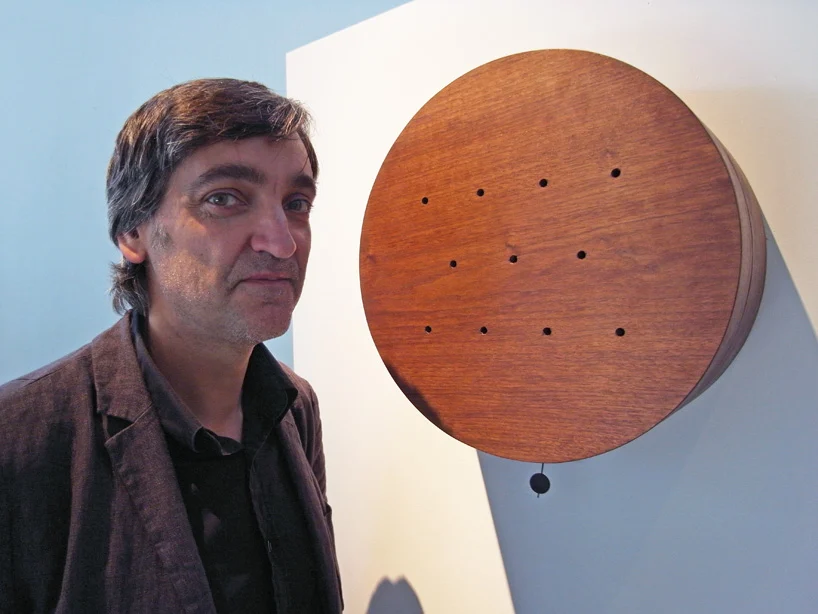
Time to Eat by Martí Guixé, image via Designboom
Time to Eat communicates different moments of the day through smell.
Instead of showing a number, the clock releases scents associated with activities such as breakfast, cooking vegetables or preparing tomato sauce.
The interesting question is:
What other senses could be used to represent time?
Martí Guixé: Time For
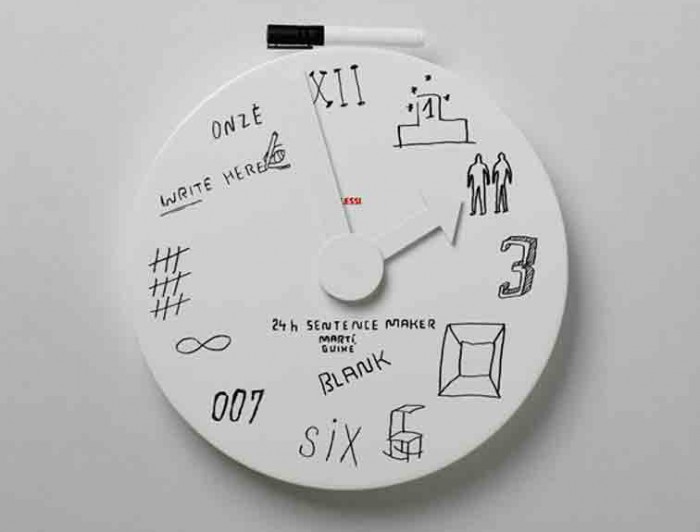
This project questions what information a clock actually needs to provide and how conventional clock interfaces shape our experience of time.
Thorunn Arnadottir: Sasa Clock
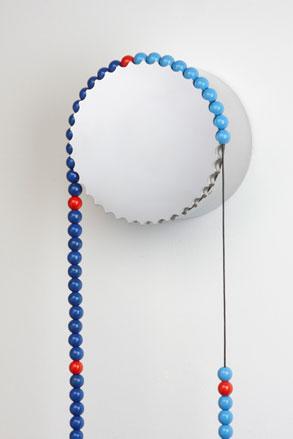
Thorunn Arnadottir, Sasa Clock.
The Sasa Clock consists of painted wooden beads suspended over a slowly rotating carousel.
A bead slips down the cord every five minutes.
Time becomes a sequence of physical events rather than a continuously moving hand or changing number.
More clock references
Golan Levin’s lecture on representing time collects many historical, artistic and experimental examples:
Representing Time, Golan Levin
When browsing the examples, do not focus only on appearance.
Ask:
- What source of time does the work use?
- What is cyclical?
- What accumulates?
- What disappears?
- What repeats?
- What is measured?
- What is deliberately not measured?
- Is the current time readable?
- Does it matter if it is not?
- What relationship to time does the work propose?
p5.js example
A simple p5.js clock can begin by reading:
hour();
minute();
second();
and mapping these values to visual properties.
Do not treat this example as a visual model to reproduce.
Instead identify:
- where time enters the program
- how values are mapped
- which properties change
- which cycles repeat
- what could be replaced with another visual relationship
Resources
- John Cage and time-based works
- p5.js reference:
hour(),minute(),second()andmillis() - Coding Challenge: Clock
- Time as a spiral
- Perspectives on linear and cyclical time
- International Atomic Time