hslu-ki-h2501
3.4 🔍 Discussion and Reflection — Thinking Like a Philosopher
Explore how perception differs between humans and AI systems — not through theory alone, but through short, practical and creative exercises. Each activity helps translate abstract ideas from George Berkeley and Maurice Merleau-Ponty into experiences or examples relevant to computing, robotics, and interaction design.
Activity 1 — Data or Experience?

Goal: Differentiate between processing information and perceiving experience..
Duration: 5–10 minutes.
Format: Pairs or small groups.
Steps
- Read the following list of examples.
- Decide whether each is closer to AI perception (data, computation) or human perception (embodied, experiential).
- Add to the list
Examples:
- Recognizing a cat in an image
- Feeling the cat’s fur
- Detecting sadness in a voice recording
- Feeling sad because of the tone
- Navigating a dark room
- A robot mapping a room with lidar
- …
Debrief
Reflect on
“Where do you draw the line between perception and data processing?”
Then on to:
- Berkeley’s view: perception creates the world.
- Merleau-Ponty’s view: perception happens through the body.
Activity 2 — If the Sensors Go Dark
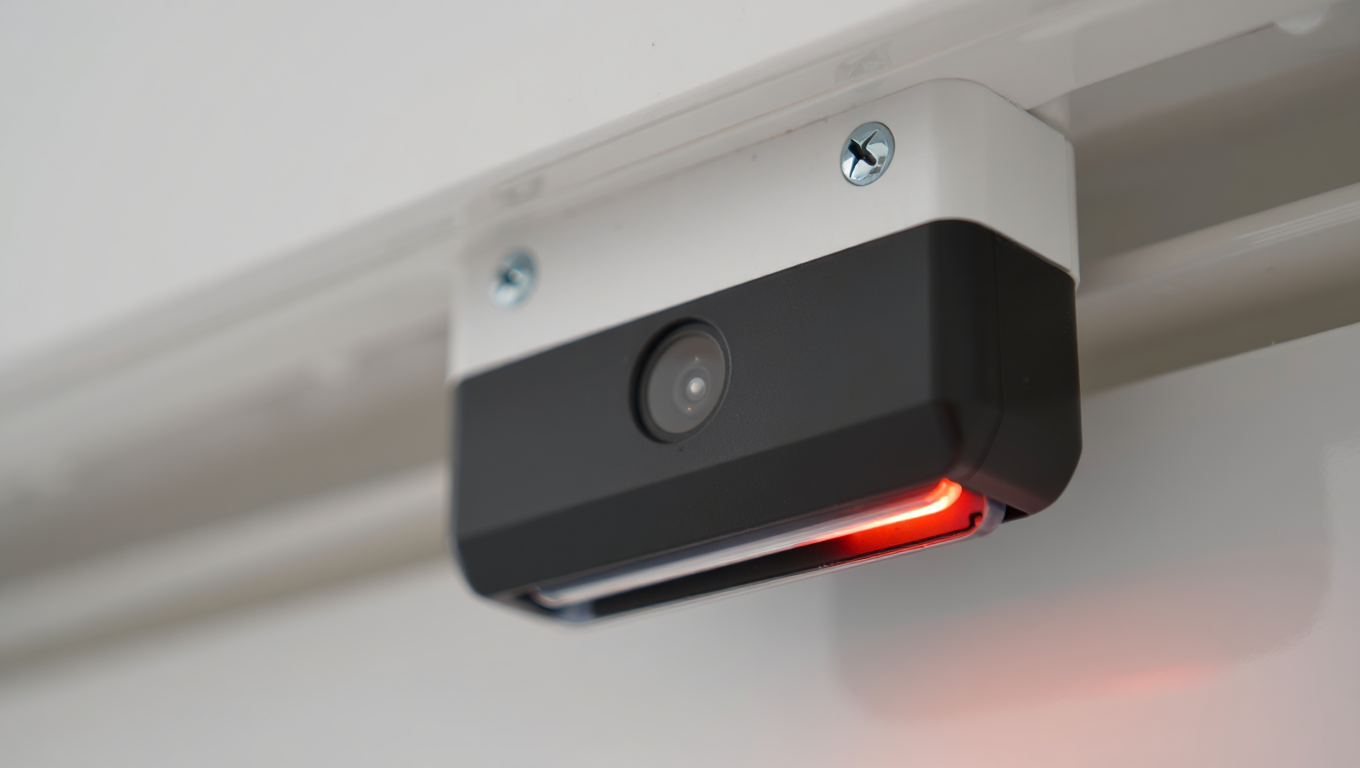
Goal: Apply Berkeley’s idea that “to be is to be perceived.”.
Duration: 5–8 minutes.
Format: Small groups.
Setup
Consider this scenario:
“Imagine an AI vision system trained on millions of images.
One day, it’s turned off — all sensors disconnected, no data coming in.
Does its world still exist?”
Steps
-
In group write a two-sentence response:
- “Yes, because…” or “No, because…”
-
Use technical reasoning if possible (data storage, model memory, computation).
- Example: “Yes, its parameters still encode a version of the world.”
- Example: “No, without active perception, there is no world at all.”
Debrief
Discuss a few answers. Then connect to Berkeley:
“He believed that when perception stops, the world disappears. For AI — does data storage count as ongoing perception?”
Activity 3 — Embodied or Disembodied?

Goal: Experience Merleau-Ponty’s idea that perception is embodied and situated..
Duration: 7–10 minutes.
Format: Whole class or small groups.
Choose one of the following formats depending on your space and time.
Option A – Blind Navigation
- One student closes their eyes while a partner guides them 3–4 meters using only voice instructions.
- Swap roles.
Discuss:
- How did you perceive distance or direction without vision?
- What replaced your usual sensory information?
Option B – Touch Recognition
- Place small objects (USB drive, apple, coin, marker, etc.) inside an opaque bag.
- Students identify them by touch.
Discuss:
- What kind of knowledge did your body provide?
- Could an AI replicate that form of understanding through sensors?
Option C – Design Analogy
-
Pose the challenge: “Design a robot that must find and pick up a coffee cup in a real room.”
-
Outline (verbally or on paper):
- What sensors it needs
- How it would move
- How it would know it succeeded
Discuss:
- “Would this robot see the cup, or would it feel its way to it?”
💬 Activity 4 — AI as a Philosopher (LLM Integration)
Goal: Use an AI language model (e.g., ChatGPT, Perplexity, Claude) to explore how machines interpret philosophical ideas.
Duration: 10–15 minutes.
Format: Individual or pairs.
Steps
-
Open an AI chatbot.
-
Give it one of these prompts:
- “You are George Berkeley. Explain AI perception in your own words.”
- “You are Maurice Merleau-Ponty. What do you think of robots that can feel touch?”
- “You are an AI philosopher combining both ideas — define perception in one sentence.”
-
Copy or paraphrase 2–3 interesting responses.
-
Then answer these short questions:
- What does the AI assume about perception?
- Does it understand or just recombine ideas?
- Which answer sounds most “human”?
Debrief
Invite a few to share their favorite “AI philosopher quote.” Then ask:
“Did the LLM truly perceive the philosophers’ ideas, or did it just simulate them?”
→ Does AI perceive, or does it merely process?
🪜 Recommended Flow (30–35 minutes total)
| Time | Activity | Focus |
|---|---|---|
| 5–7 min | Data or Experience? | Warm-up comparison |
| 8 min | If the Sensors Go Dark | Apply Berkeley |
| 10 min | Embodied or Disembodied? | Apply Merleau-Ponty |
| 10 min | AI as a Philosopher (LLM) | Synthesis + reflection |
Optional closing question: “If perception is what makes a world real, what kind of world does AI live in?”